Choose technology for a specific risk
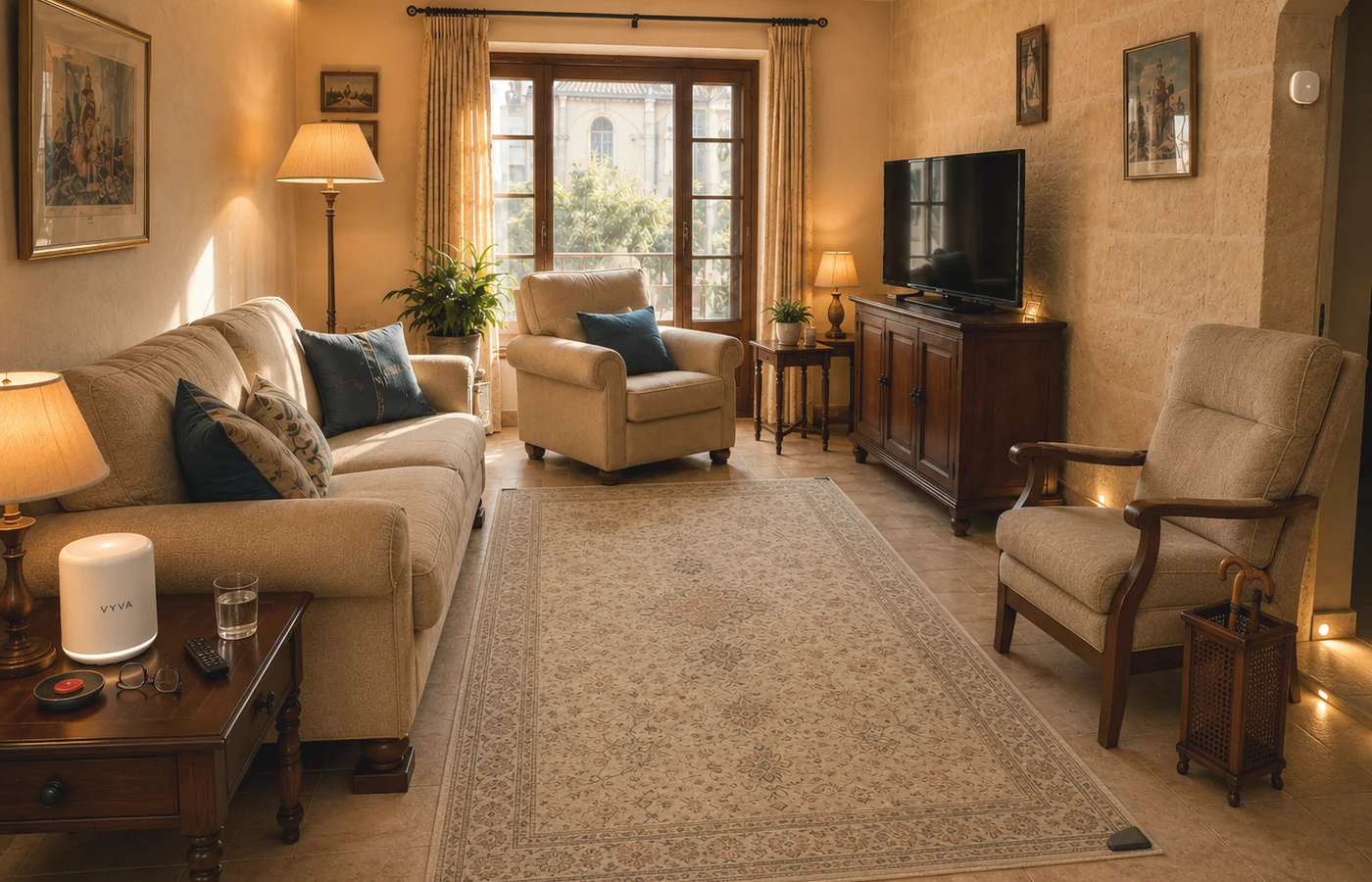
Motion lighting can reduce night-time hesitation. Door alerts can support agreed routines. Emergency buttons can put help within reach. Sensors can detect hidden water or smoke risks.
Each device should answer a clear question: what risk does this reduce, and who responds if it triggers?
Design around the person, not the app
The person at home should not need to manage complex settings or remember new steps during a stressful moment. Dashboards are useful only when the daily experience remains understandable.
Good setup includes testing, labels, household training, and agreement on who receives alerts.
Combine smart support with physical safety
Technology cannot replace a stable handrail, safer shower access, or open walking space. The strongest plans combine physical adaptations with smart support where it adds value.
We review both the home environment and the support routine before recommending smart safety options.
Planning checklist
- Identify the risk before choosing a device.
- Confirm Wi-Fi, power, and signal reliability.
- Decide who receives alerts and what they should do.
- Avoid intrusive monitoring unless consent and need are clear.
- Test the system with the person present.
Common questions
What smart safety device is best to start with?
For many homes, motion lighting and an emergency contact option are useful first checks. The right choice depends on daily routine and risk points.
Are cameras needed for home safety?
Usually no. Cameras should not be the default. Less intrusive options such as lighting, sensors, and agreed alerts are often more respectful and targeted.