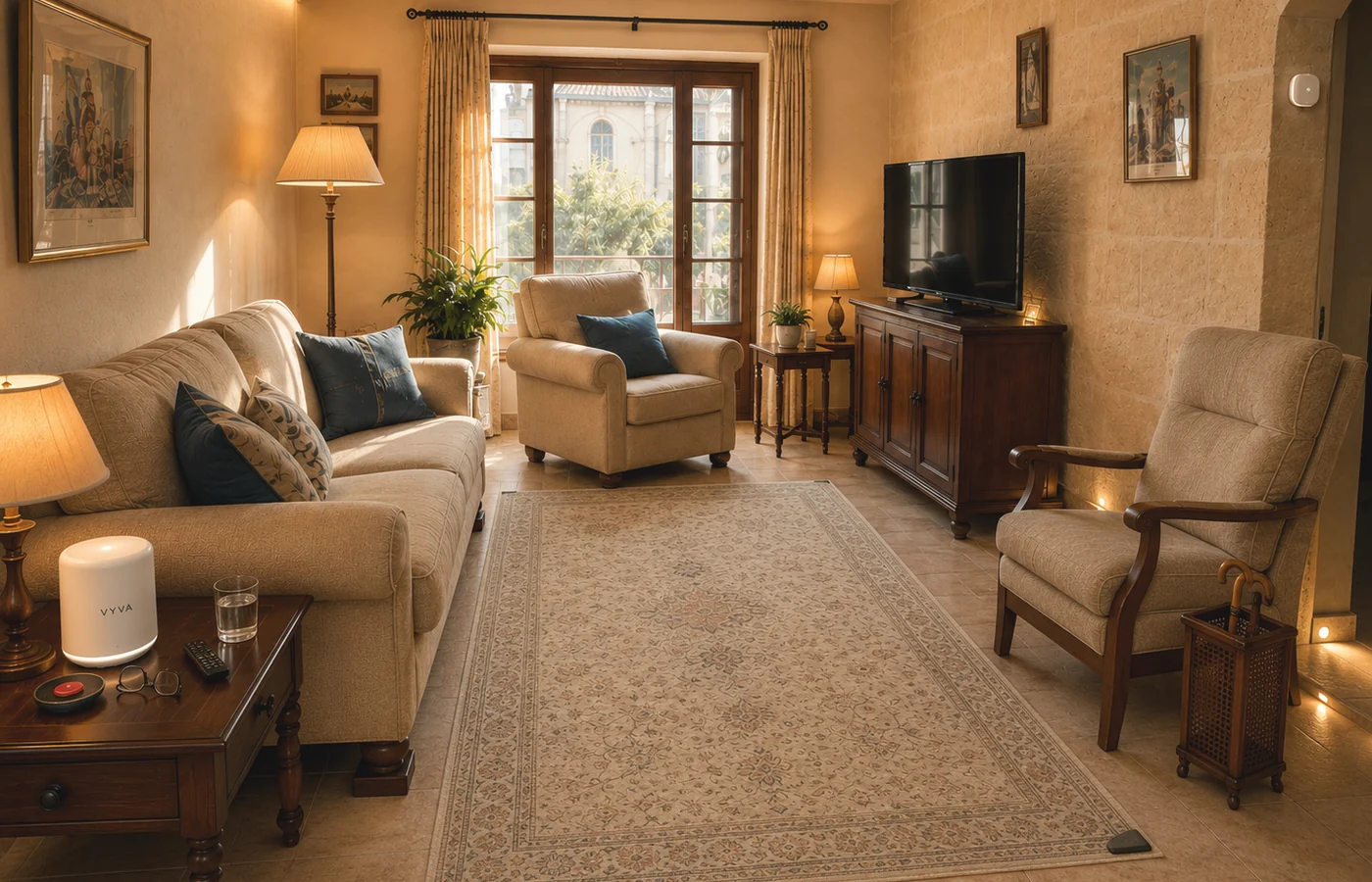
Start with the moments where falls actually happen
Walk through the day with the person at home: standing from bed, reaching the bathroom, entering the shower, preparing food, carrying laundry, answering the door and getting up at night. Note where they pause, rush, hold furniture or avoid a space.
Those details matter more than a generic shopping list. A grab bar, rail, motion light, threshold change or furniture move only helps when it supports the movement the person is already trying to make.
Remove trip hazards, but do not stop there
Loose rugs, curling mats, cables, cluttered walking space and unstable furniture should be fixed immediately. But the bigger pattern matters too: no support where the person transfers, light switches too far away, shoes that slip, or a bathroom trip that becomes risky at night.
A useful review sequence is bathroom, bedroom-to-bathroom movement, stairs, entrance, kitchen and living areas. This keeps the review focused on daily risk rather than trying to redesign every room at once.
Separate urgent fixes from planned adaptations
Urgent fixes are the issues most likely to cause harm this week: a wet transfer with no support, a dark stair, a high threshold used daily, an unstable toilet transfer, or a phone left out of reach. Planned adaptations are still important, but may need measuring, quotes, landlord or community permission, or grant checks.
CasaMia assessments separate those decisions: what to remove today, what to adapt first, what needs measuring or a priced plan, and what can be watched over time.
Connect the home review with health and daily support
A home can be made safer, but falls prevention is not only construction. Ask whether the person has new dizziness, pain, vision changes, foot problems, medication changes, urinary urgency, confusion, weakness or fear of falling. Those signals may need a clinician, physiotherapist, pharmacist or optician alongside home changes.
A strong action plan names who will handle each part: open walking space, install support, organise lighting, review medication questions with a professional, test emergency reach and check back after the first changes are in place.
Planning checklist
- Walk through every daily movement and mark where the person reaches for walls, furniture or doorframes.
- Remove or fix loose rugs, curled mats, cables, low furniture and clutter from walking space.
- Check that bed, toilet and favourite chair heights allow the person to stand without pulling unstable furniture.
- Make the path from bed to bathroom visible at night without glare.
- Confirm stairs, steps and thresholds have stable support where the person actually needs it.
- Review bathroom transfers, wet surfaces, towel reach and shower entry together.
- Keep phone, emergency button or agreed help method reachable from bed and bathroom.
- Ask a health professional about dizziness, medication changes, vision, foot pain or repeated near falls.
Official links and resources
A room-by-room home safety checklist covering floors, stairs, kitchen, bathroom and bedroom.
Open official resourceNational Institute on AgingPrevent falls and fracturesClear health guidance on fall risks, exercise, vision, medicine review and home changes to combine with home adaptation.
Open official resourceMedlinePlusPreventing falls at homePatient-friendly guidance on reducing fall risk at home, including bathroom, stairs, lighting, footwear and daily movement.
Open official resourceCommon questions
What is the first thing to fix to reduce fall risk at home?
Start with the movement that is both frequent and already unsafe. For many homes that is bathroom use, stairs, the entrance, or getting from bed to toilet at night.
Does every bathroom need grab bars?
No. Grab bars help when they are needed, positioned correctly, and fixed to suitable surfaces. A review should consider mobility, transfers, wall type and daily habits.
When should you ask for professional help?
Ask for help when there has been a fall or near fall, the person is changing how they move, multiple rooms are involved, or it is unclear which works should happen first.