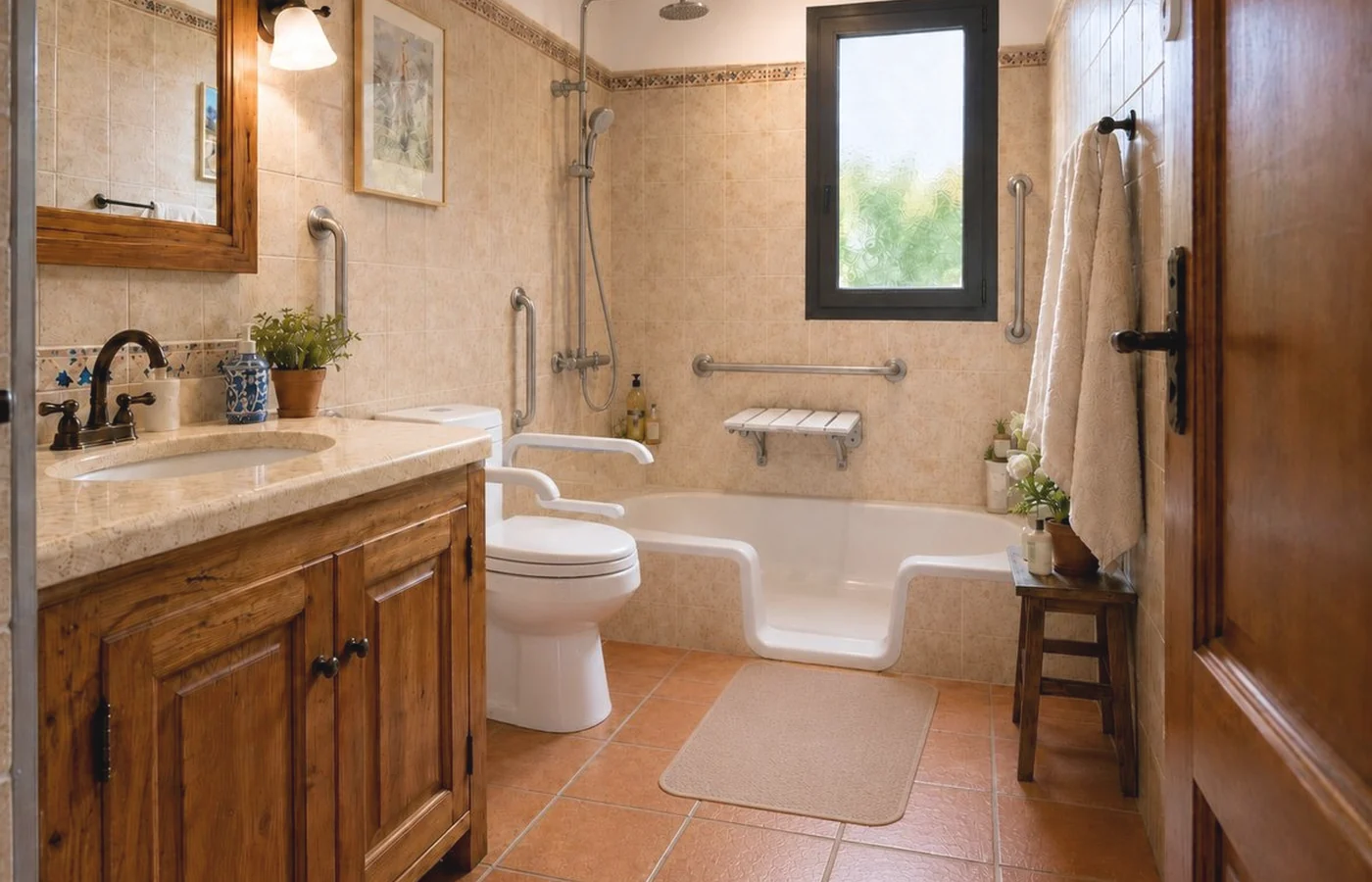
Mistake 1: Treating every support as safe support
Towel rails, sink edges, shower screens and suction handles are often used like handrails, but they are not reliable body-weight support. If the person trusts the wrong object, the risk can increase rather than decrease.
A grab bar only helps when it is in the right position for the movement being supported. Shower entry, standing from the toilet, turning near the sink and drying after a shower can require different support points.
Mistake 2: Fixing the shower seat but ignoring the entry
A shower stool or folding seat can help, but it does not solve a high bath edge, narrow door or slippery entry. If the person still has to lift a foot over an edge while wet, tired or unsupported, the main risk remains.
A safer plan considers entry height, anti-slip surface, seating, hand-held shower reach, drainage, screen or curtain clearance, towel reach and where a helper can stand if assistance is needed.
Mistake 3: Forgetting toilet transfers and night use
Many falls are linked to urgency, fatigue or getting to the bathroom at night. The toilet area needs enough space, stable side support where useful, reachable paper, good light and a path that does not require turning sharply around clutter.
Check how the person reaches the bathroom from bed, whether they use a walking aid, whether the door opens safely, and whether emergency help is reachable if they sit or fall.
Mistake 4: Mixing hot water risk with reach problems
Water controls can be difficult when grip, vision or reaction speed changes. If the person cannot easily set temperature, reach a hand shower, or turn water off while seated, the bathroom may still feel unsafe even after bars are installed.
Thermostatic controls, visible handles, reachable storage and a hand-held shower can reduce strain, but they should be matched to the existing plumbing, wall surfaces and user habits.
Planning checklist
- If the person is comfortable being observed, watch how they enter, wash, turn, dry, use the toilet and leave.
- Remove or replace loose bath mats and any object that slides when wet.
- Confirm the shower or bath entry has support before, during and after the step or transfer.
- Check whether toilet height and side support allow sit-to-stand without pulling a towel rail or sink.
- Make water controls, soap, towels and clothing reachable without twisting or bending.
- Add low-glare night lighting from bedroom to bathroom and inside the bathroom.
- Keep an emergency call option reachable from the bathroom.
- Plan where a helper can stand without blocking movement or slipping.
Official links and resources
Includes specific bathroom prompts on mats, shower floors, grab bars and getting in and out of the tub or shower.
Open official resourceMedlinePlusPreventing falls at homePlain-language advice on bathroom, bedroom, footwear, stairs and lighting changes that reduce everyday fall risk.
Open official resourceCEAPAT / ImsersoAssistive products catalogueSpanish public catalogue for comparing support products such as bathing aids, toilet aids, rails and mobility supports.
Open official resourceCommon questions
Are suction grab bars safe?
They should not be used as primary body-weight support. If balance or transfers depend on the support, use professionally fixed bars or other appropriate equipment.
Is a walk-in shower always the right first option?
Not always. It depends on mobility, bathroom layout, drainage, budget, and urgency. Sometimes immediate support and anti-slip changes come first.
Should the bathroom door open outwards?
It can help in some layouts because a fall behind an inward-opening door may block access. The right answer depends on the door, hallway, privacy needs and whether a safer alternative is possible.