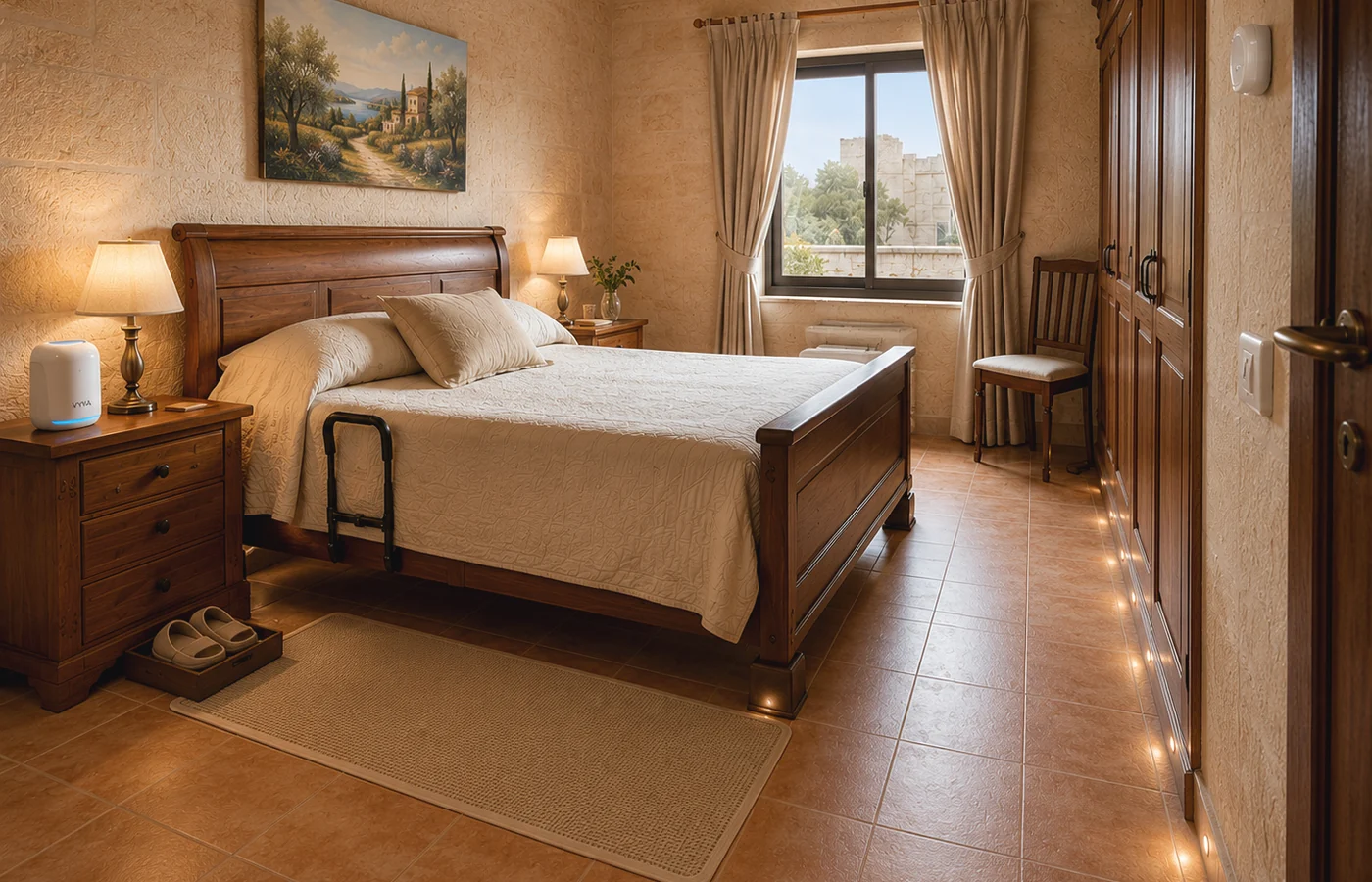
Start at the bedside, before the person stands
The first movement of the night is usually sitting up, placing feet, reaching for glasses or walking aid, standing and turning. Bed height, mattress softness, footwear, bedside furniture and support points all affect that moment.
If the person pushes on a light bedside table, reaches behind them for a phone, or has to stand before finding a walking aid, the layout is asking too much of a tired person.
Light the path, not just the room
Strong overhead light can be disorienting, while darkness hides floor changes and furniture edges. Low-level motion lighting can make the path visible without forcing the person to search for switches.
Check the actual path from bed to bathroom: the side of the bed used, the first step, doorway, hallway, thresholds, rugs, bathroom entrance and toilet position. Shadows and glare matter as much as brightness.
Reduce urgency and rushing where possible
Bathroom urgency is one reason night-time movement becomes risky. Ask whether the person avoids drinking, rushes, wakes confused, has dizziness on standing, or takes medication that affects balance or sleep.
The home plan can reduce trip risk, but repeated night urgency or dizziness should also be discussed with a clinician. Safer lighting and support are not a substitute for checking health causes.
Keep help reachable from the two riskiest places
Emergency buttons, phones or agreed alert systems should be reachable from the bed and bathroom. Charging the phone across the room may keep the battery full but leave help out of reach.
Agreed contacts should know who responds, how they enter if the door is locked, and what happens if help is triggered at night.
Planning checklist
- Can the person sit up and stand without pulling unstable furniture?
- Are glasses, phone, water, medication and walking aid reachable before standing?
- Is footwear stable, easy to put on and kept in the same place?
- Is the bed-to-bathroom path visible with low light and minimal glare?
- Are rugs, cables, storage boxes and low furniture removed from the night-time walking space?
- Can the bathroom door, toilet and light be used without awkward reaching or turning?
- Is emergency help reachable from both bed and bathroom?
- Have agreed contacts confirmed who responds and how they can enter if needed?
Official links and resources
Useful guidance on fall risk factors such as medicines, vision, exercise and home changes that affect night-time safety.
Open official resourceCDC STEADICheck for Safety home checklistPrompts for floors, stairs, bedroom, bathroom and lighting to use during a night-safety review.
Open official resourceNational Institute on AgingAging in place: growing older at homeBroader official guidance on planning support, home changes and help at home as needs change.
Open official resourceCommon questions
What light is best for night safety?
Low-level motion lighting often works well because it supports movement without the shock of bright overhead light. The best setup depends on the room, eyesight, shadows and whether light wakes or disorients the person.
Does bed height matter for fall prevention?
Yes. A bed that is too low or too high can make transfers harder. Bed height should suit leg strength, balance, and support needs.
What if the person gets up many times each night?
Review the bedroom-to-bathroom movement immediately, but also raise the pattern with a health professional. Urgency, dizziness, medication timing, pain or confusion may need medical advice as well as home changes.