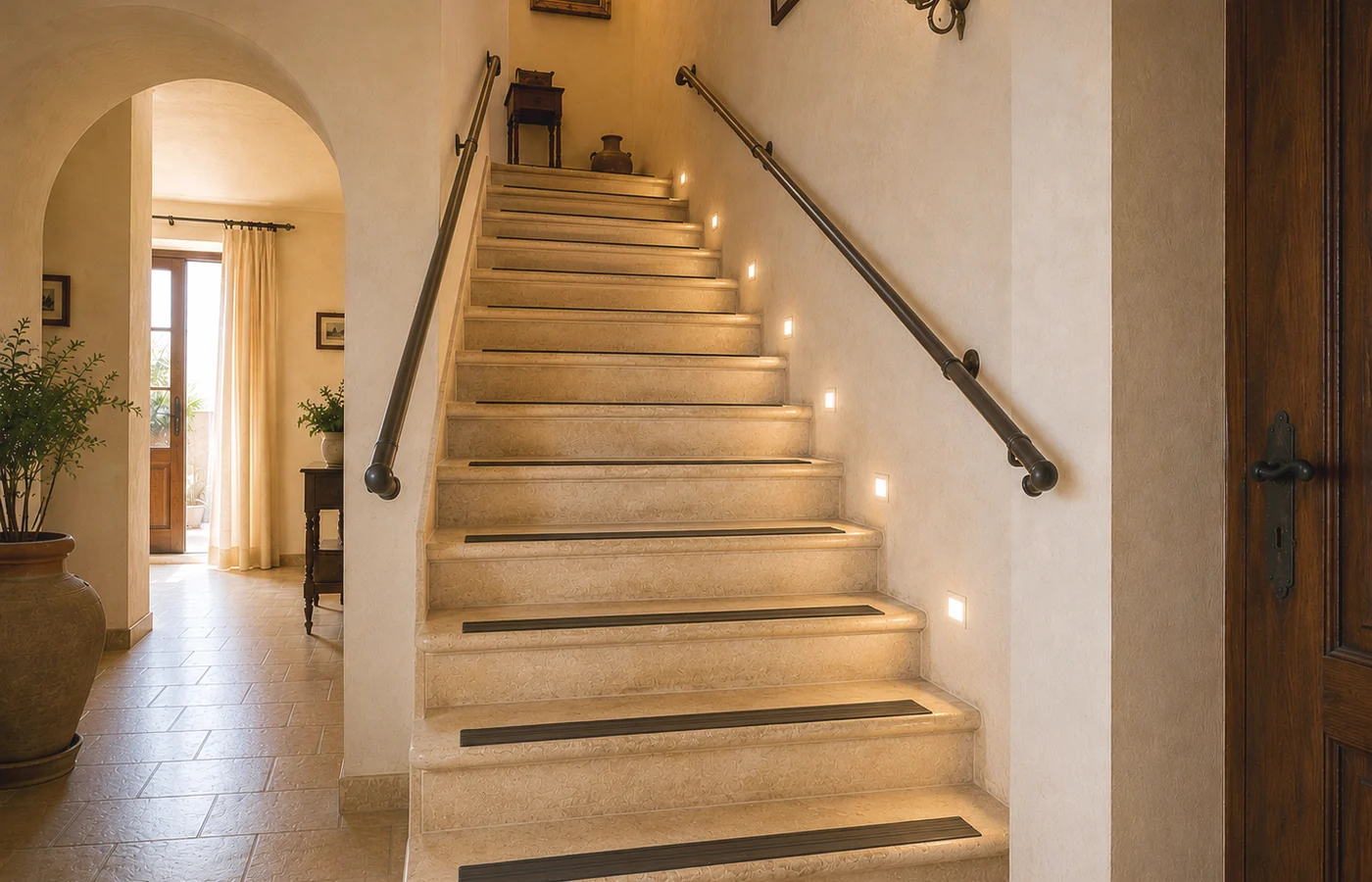
Look for interruptions in support
Many staircases have rails that stop too early, start too late, or disappear at a turn. These gaps are exactly where someone may reach for a wall or furniture.
Safer stairs give reliable support before the first step and after the last step, with special care at landings.
Improve how each step is seen
Poor lighting, shiny surfaces, patterned flooring, and low contrast can make steps harder to judge, especially when vision, confidence or energy has changed.
Motion lighting, step-edge contrast, and reducing glare can make the staircase easier to understand at a glance.
Plan around daily use
Ask when the stairs are used, whether the person carries laundry or shopping, whether they pause halfway, and whether they avoid the stairs when tired.
The recommendation may include rails, lighting, contrast, storage changes, or changing routines.
Planning checklist
- Is there reliable support before the first step and after the last?
- Are landings and turns clearly lit?
- Can the person see each step edge?
- Are objects stored on or near the stairs?
- Does the person carry items that block one hand from using the rail?
Common questions
Is one handrail enough?
Sometimes, but not always. It depends on the staircase, mobility, direction of travel, turns, and whether two-sided support is needed.
Do stair treads help prevent falls?
They can help when correctly selected and installed, but loose or poorly fitted treads can become hazards. Lighting and handrail support should also be reviewed.